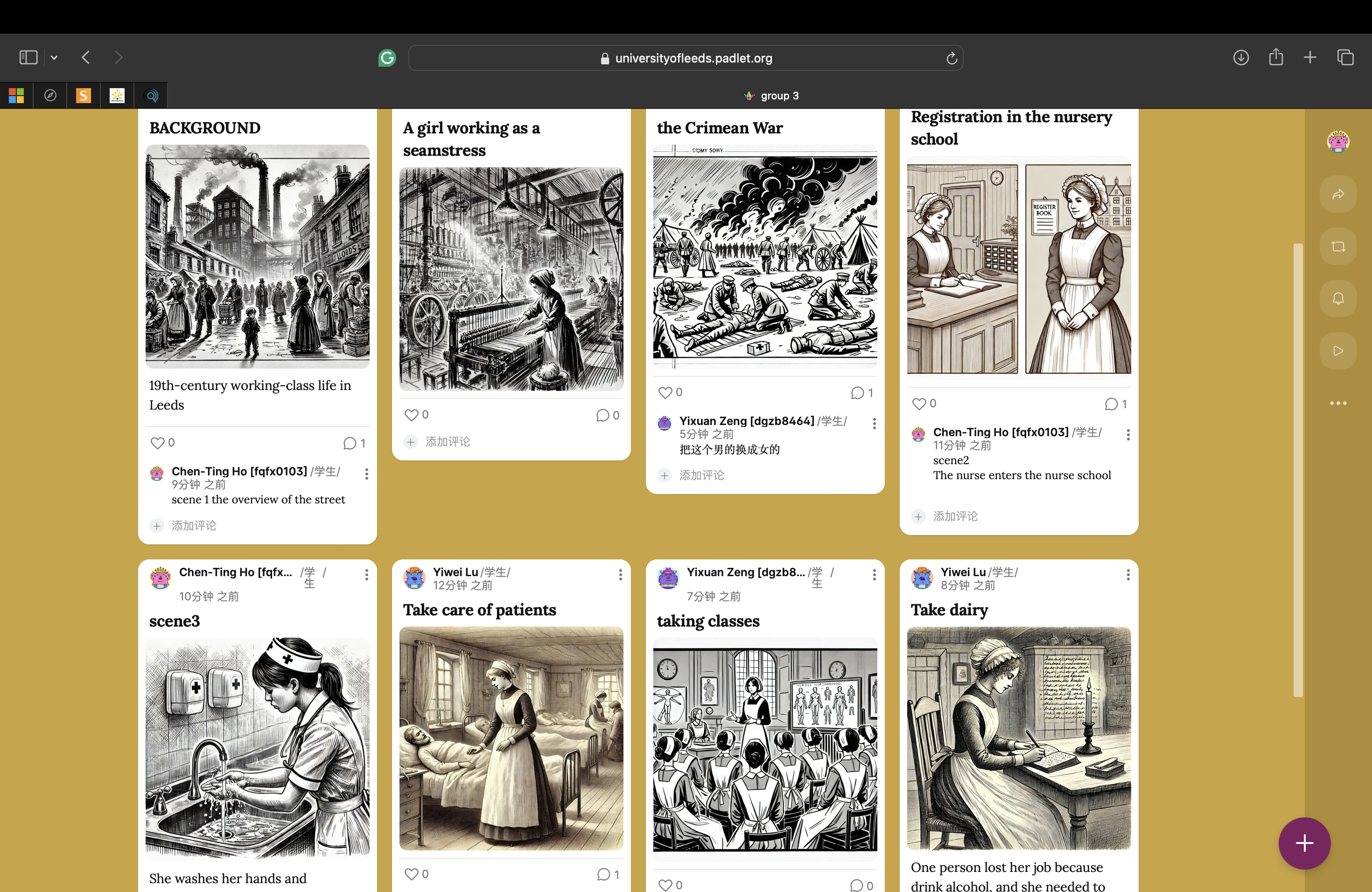
This week, we explored different software tools for digitising historical data, such as OCR, to extract text from archival materials. While these tools were helpful, we met challenges when using handwritten pictures. Some texts were misrecognized or incomplete. I think this is the limitation of automated transcription. It revealed that digitising historical data is about technology, human interpretation, and background context. Similarly, using CoPilot to generate historical images was an interesting experience. While the AI could create visual representations, the accuracy of historical details varied. Sometimes, the generated images reflected modern biases rather than recreating historical settings. For example, when we asked it to generate the picture of "nurse on the war", it created male nurses instead of female nurses.
Digitisation and AI-generated content can make historical information more accessible and engaging, but they must be critically evaluated. These tools helped us develop Jane’s daily life, enhancing our storyboard with extracted text and AI-generated imagery. We created a storyboard based on last week’s materials. The scenes contained her daily routine, from sanitizing her hands before tending to patients to attending training sessions and writing in her diary. By structuring her story in this way, we considered how historical records can be represented and understood by everyone.
This process also made me reflect on the complexities of digitisation. As Fickers describes, historical data carries layers of materiality, and losing context can distort meaning. While digitisation increases accessibility, it cannot fully capture the lived experiences behind the records. This workshop showed me that interpreting historical data requires a balance of technological tools and critical thinking to preserve authenticity and relevance.